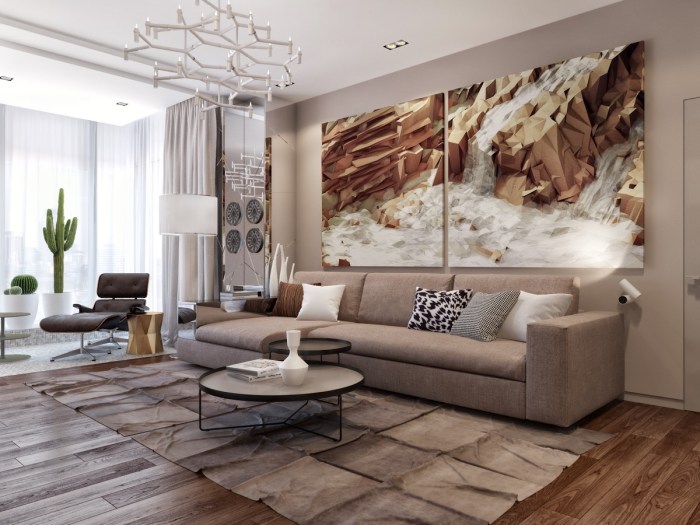
Delving into Living Room Wall Art Ideas, this introduction immerses readers in a unique and compelling narrative, with casual formal language style that is both engaging and thought-provoking from the very first sentence.
When it comes to designing your living room, wall art can play a crucial role in adding personality and charm to the space. From choosing the right size to exploring creative arrangements, this guide will provide you with a wealth of ideas to elevate your decor.
Living Room Wall Art Ideas
When it comes to decorating your living room, wall art can play a crucial role in adding personality and style to the space. Here are some ideas to help you choose the right wall art for your living room.
Styles of Wall Art
- Abstract Art: Adds a modern and artistic touch to the living room.
- Gallery Wall: Create a curated collection of artworks for a personalized look.
- Botanical Prints: Bring a natural and calming vibe to the room.
- Vintage Posters: Add a touch of nostalgia and character to the space.
Choosing the Right Size
Consider the size of your living room wall when choosing wall art. For larger walls, opt for oversized pieces or a gallery wall. In smaller spaces, choose smaller artworks or one large focal piece to avoid overwhelming the room.
Impact of Color Schemes
- Neutral Tones: Create a sense of calm and sophistication.
- Bold Colors: Add drama and visual interest to the room.
- Complementary Colors: Harmonize with the existing decor for a cohesive look.
Arranging Wall Art
Experiment with different arrangements to find the best layout for your living room. Consider grouping artwork together, staggering pieces for a dynamic look, or creating a focal point above a sofa or mantel.
Lighting Solutions for Living Rooms
When it comes to designing a living room, lighting plays a crucial role in setting the mood and ambiance of the space. Different types of lighting, such as ambient, task, and accent lighting, serve specific purposes and can be combined to create a cozy atmosphere.
The Importance of Different Types of Lighting
Each type of lighting serves a different function in a living room:
- Ambient lighting provides overall illumination and sets the tone for the room.
- Task lighting is focused on specific areas for activities like reading or working.
- Accent lighting highlights architectural features or artwork to add visual interest.
Tips for Layering Lighting Effectively
Layering different types of lighting can create depth and warmth in a living room:
- Start with ambient lighting as the base layer to evenly light the room.
- Add task lighting with floor lamps or table lamps for functional purposes.
- Incorporate accent lighting with wall sconces or picture lights to highlight focal points.
- Use dimmers to adjust the intensity of the light and create a versatile atmosphere.
Smart Lighting Technology in Living Rooms
Smart lighting systems offer convenience and customization for your living room:
- Control the lighting remotely through smartphone apps or voice commands.
- Set up schedules or routines to automate lighting based on your preferences.
- Adjust the color temperature and brightness to suit different activities or moods.
Unique Lighting Fixtures as Statement Pieces
Elevate your living room design with striking lighting fixtures that double as statement pieces:
- Choose a chandelier or pendant light to make a bold focal point in the room.
- Opt for sculptural floor lamps or unique wall sconces to add artistic flair.
- Consider oversized lamps or industrial-style fixtures for a modern touch.
Outdoor Furniture for Living Spaces

Outdoor living spaces are becoming increasingly popular, offering a great way to enjoy the fresh air and nature while relaxing in comfort. Choosing the right outdoor furniture is crucial to create a welcoming and functional space that suits your needs and style preferences.
Durable Outdoor Furniture
When selecting outdoor furniture, durability is key to ensuring longevity and resistance to various weather conditions. Some examples of durable outdoor furniture materials include:
- Wicker: Synthetic wicker is a popular choice for outdoor furniture as it is weather-resistant and requires minimal maintenance.
- Teak: Teak wood is known for its natural oils that make it resistant to rot, moisture, and insects, perfect for outdoor use.
- Metal: Aluminum or stainless steel furniture is durable and lightweight, making it ideal for outdoor spaces.
Creating a Seamless Transition
To create a seamless transition from indoor to outdoor living spaces, consider using similar or complementary furniture styles and colors. For example, if your indoor furniture has a modern design, choose outdoor furniture with clean lines and contemporary finishes. Incorporating outdoor rugs, throw pillows, and plants can also help tie the spaces together.
Space-Saving Options
For small living areas, space-saving outdoor furniture is essential to maximize the use of the limited space. Some space-saving options include:
- Foldable chairs and tables that can be easily stored when not in use.
- Bench seating with built-in storage for cushions and other outdoor essentials.
- Hanging chairs or hammocks that can be suspended from a pergola or tree to save floor space.
Patio Furniture Ideas
When it comes to creating a cozy outdoor living space, choosing the right patio furniture is essential. Not only does it add style to your patio, but it also provides comfort for you and your guests to relax and enjoy the outdoors.
Benefits of Different Patio Furniture Materials
- Aluminum: Lightweight, durable, and resistant to rust, making it ideal for outdoor use.
- Resin: Easy to clean, weather-resistant, and available in a variety of colors and styles.
- Wood: Classic and timeless look, can be stained or painted to match your outdoor decor, but requires more maintenance.
Creating a Cozy Outdoor Seating Area
- Arrange furniture in a conversational layout to encourage interaction among guests.
- Consider the placement of furniture in relation to sun exposure and natural elements for optimal comfort.
- Add throw pillows, outdoor rugs, and blankets to enhance comfort and style.
Accessories for Outdoor Living Spaces
- Outdoor umbrellas or pergolas for shade and protection from the sun.
- Lanterns, string lights, or outdoor candles for ambient lighting in the evenings.
- Outdoor cushions, poufs, or ottomans for additional seating and comfort.
In conclusion, Living Room Wall Art Ideas offer endless possibilities to transform your space into a reflection of your style and taste. By incorporating diverse styles, playing with color schemes, and experimenting with unique arrangements, you can truly make a statement with your wall art. Elevate your living room decor with these tips and let your creativity shine through.
Question Bank
How do I choose the right size of wall art for my living room?
Consider the wall space available and the furniture layout in your living room. Larger walls can accommodate oversized pieces, while smaller walls may benefit from a gallery wall of smaller artworks.
What impact do color schemes in wall art have on the ambiance of a living room?
Color schemes can set the mood in a living room. Warm tones like reds and yellows create a cozy atmosphere, while cool tones like blues and greens evoke a sense of calmness. Choose colors that complement your existing decor for a harmonious look.
How can I arrange wall art to make a statement in my living room?
Experiment with different layouts such as grid arrangements, asymmetrical displays, or a single bold statement piece. Mix and match frames and sizes for added visual interest, and don’t be afraid to play with unconventional placements to create a unique focal point.


